Environmental Surveys
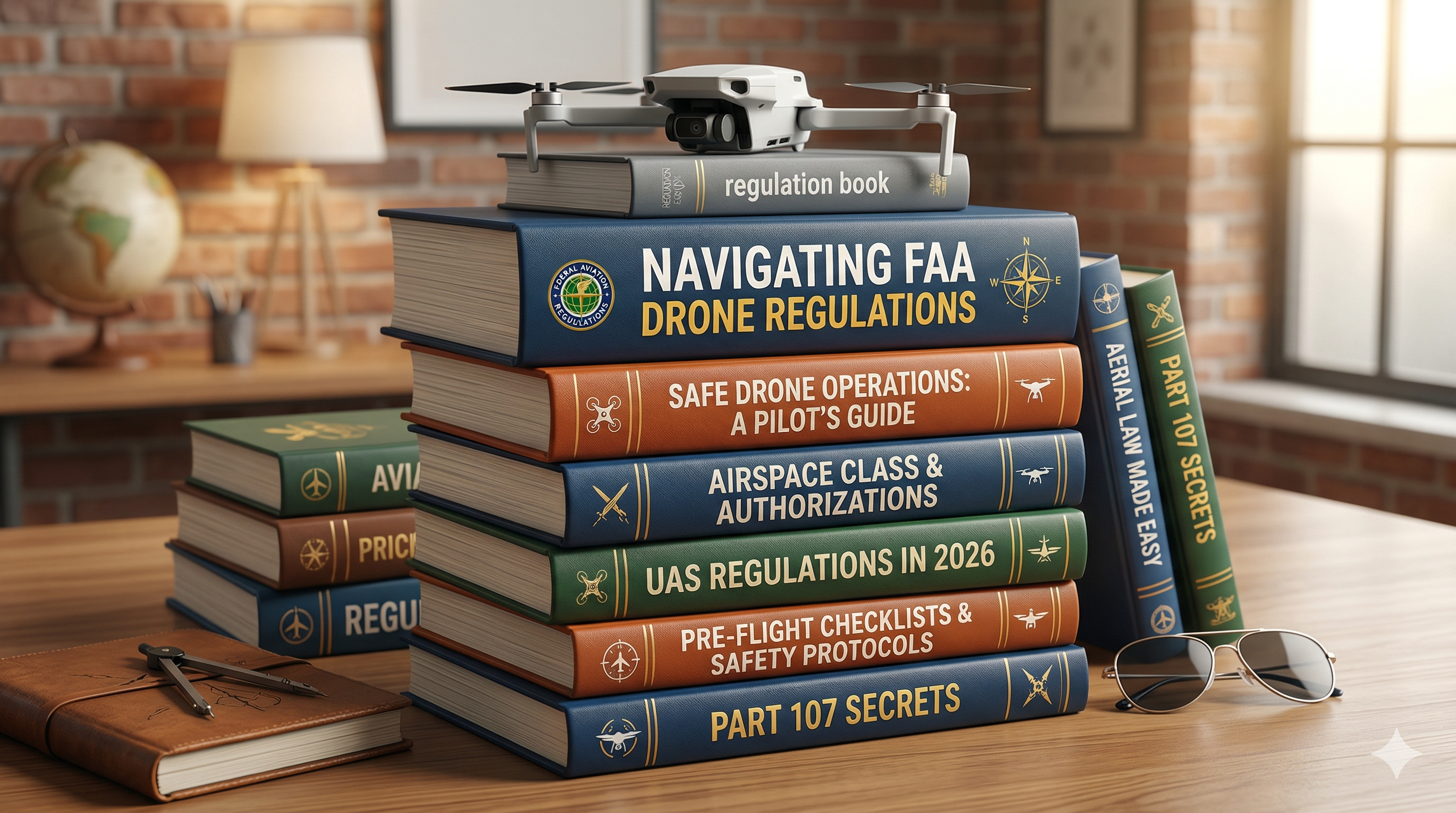

Understanding FAA drone regulations doesn't have to ground your construction projects—we'll help you stay compliant while keeping your aerial intelligence operations flying high.
Here's a question we hear all the time: "Can't I just hire my nephew who has a drone?" Sure, you could. But when something goes wrong—and in construction, things can go wrong fast—you'll wish you'd partnered with someone who's fully Part 107 certified and obsessed with safety.
Part 107 certification isn't just a piece of paper. It's proof that your drone operator understands airspace classifications, knows how to read weather conditions, and can navigate the complex FAA regulations that govern commercial drone operations. That "cheap" drone option might save you a few hundred dollars upfront, but one incident involving an uncertified operator could cost you millions in liability, insurance claims, or project delays.
We're fully Part 107 certified because we treat your site with the same respect we'd treat our own backyard. Before we even spin up the propellers, we've checked the airspace, monitored the weather, and run through our Pre-Flight Checklist. This isn't just about following rules—it's about making sure your project stays on schedule, your team stays safe, and your insurance premiums don't skyrocket.
The bottom line? Part 107 certification means you're working with a professional who understands that aerial intelligence is a tool for solving business problems, not just capturing cool footage. We handle the complex FAA regulations, the flight paths, and the technical processing, so you just get the results.
Let's get nerdy for a second. Not all airspace is created equal, and if you're flying a drone commercially, you need to know exactly what classification you're operating in. The FAA divides airspace into different classes—Class A through G—and each comes with its own set of rules and restrictions.
Most construction sites fall into Class G (uncontrolled airspace) or Class E (controlled airspace), which are generally drone-friendly. But if your project is near an airport, helipad, or in urban areas, you might be dealing with Class B, C, or D airspace, which require special authorization before we can fly. That's where LAANC—Low Altitude Authorization and Notification Capability—comes in. It's the system that allows certified operators to request near-real-time airspace authorization.
Here's why this matters for your project: if your worksite is within five miles of an airport, an uncertified hobbyist operator can't legally fly there without jumping through major regulatory hoops. We can. We monitor airspace restrictions daily, submit authorization requests when needed, and ensure every flight is compliant with FAA regulations.
That's where we come in. We treat airspace classification as a behind-the-scenes service layer that runs quietly while you focus on your project. You shouldn't have to worry about whether your drone operator filed the right paperwork or checked for temporary flight restrictions. We're high-tech on the backend, but on the frontend? We're just a team of enthusiasts who love making your job easier.
Before we launch a single drone, we run through a comprehensive Pre-Flight Checklist that covers everything from equipment inspection to site hazards. This isn't busywork—it's how we make sure every site visit delivers the aerial intelligence you need without surprises.
Our pre-flight protocols include: checking weather conditions and visibility requirements, verifying airspace authorization and temporary flight restrictions, inspecting drone equipment and battery levels, identifying potential hazards like power lines or tall structures, confirming communication with on-site personnel, and establishing emergency protocols. Every single time.
This level of preparation might sound excessive, but it's what separates professional aerial intelligence from a hobbyist with a drone. We've seen projects delayed because someone showed up to fly without checking that there was a temporary flight restriction due to a nearby medical helicopter route. We've heard stories of operators damaging equipment—or worse, causing injuries—because they didn't inspect their gear before takeoff.
Our goal is to handle the complexity so your operations run smoothly. When we show up for a site visit, you can trust that we've already done the homework. You won't lose a day of progress because we couldn't fly due to weather we should have anticipated. You won't face liability issues because we skipped a safety step. We provide the clarity you need to stay on time and under budget.
Here's something most people don't realize: Part 107 regulations require specific weather and visibility conditions for safe drone operations. We can't just fly whenever it's convenient—we need at least three statute miles of visibility and must maintain a safe distance from clouds. Wind speed, precipitation, and temperature all factor into our go/no-go decision.
Why does this matter for your construction project? Because we plan around these requirements to minimize disruption. If we're scheduled for a site visit and weather looks questionable, we'll let you know in advance and reschedule proactively. We monitor conditions continuously and build buffer time into our scheduling during unpredictable seasons.
An uncertified operator might show up and fly anyway, putting your project at risk. Reduced visibility means lower-quality data, and flying in unsafe conditions means potential equipment damage, safety incidents, or regulatory violations that could halt your entire operation. We take weather seriously because the data we capture needs to be accurate, reliable, and defensible.
We're excited about where drone tech is headed, but we're also pragmatic about current limitations. Weather and visibility requirements aren't obstacles—they're safety guardrails that protect your project, your team, and your investment. When conditions are right, we fly. When they're not, we reschedule. It's faster, it's safer, and it keeps everyone focused on the work that matters.
At Peak Perspective Drones, we spend a lot of time thinking about FAA regulations, airspace classifications, and pre-flight protocols. But don't worry—you don't have to. That's the whole point of partnering with a certified aerial intelligence provider.
We're high-tech on the backend, handling all the regulatory complexity, flight planning, and data processing. On the frontend? You just get the results. Whether you need weekly orthomosaic mapping for progress tracking, volumetric analysis for stockpile management, or high-resolution inspection footage, we deliver the clarity you need without the headaches.
Here's what working with us looks like: You tell us what problem you're trying to solve—maybe you need to track earthwork progress, verify contractor billing, or document site conditions for stakeholders. We handle the airspace authorization, weather monitoring, flight execution, and data processing. You receive accurate, actionable aerial intelligence that helps you make better decisions faster.
The difference between a certified partner and a hobbyist option isn't just about compliance—it's about reliability, professionalism, and peace of mind. When you work with us, you know that every flight is legal, every dataset is accurate, and every interaction is focused on solving your specific business challenges. We bring the drones; you bring the vision.
If you've got a project that needs a fresh set of eyes—or just a really high-res map—let's chat. We want to help you hit the ground running with aerial intelligence that keeps your operations flying high and your projects on track. Blue skies, The Peak Perspective Team