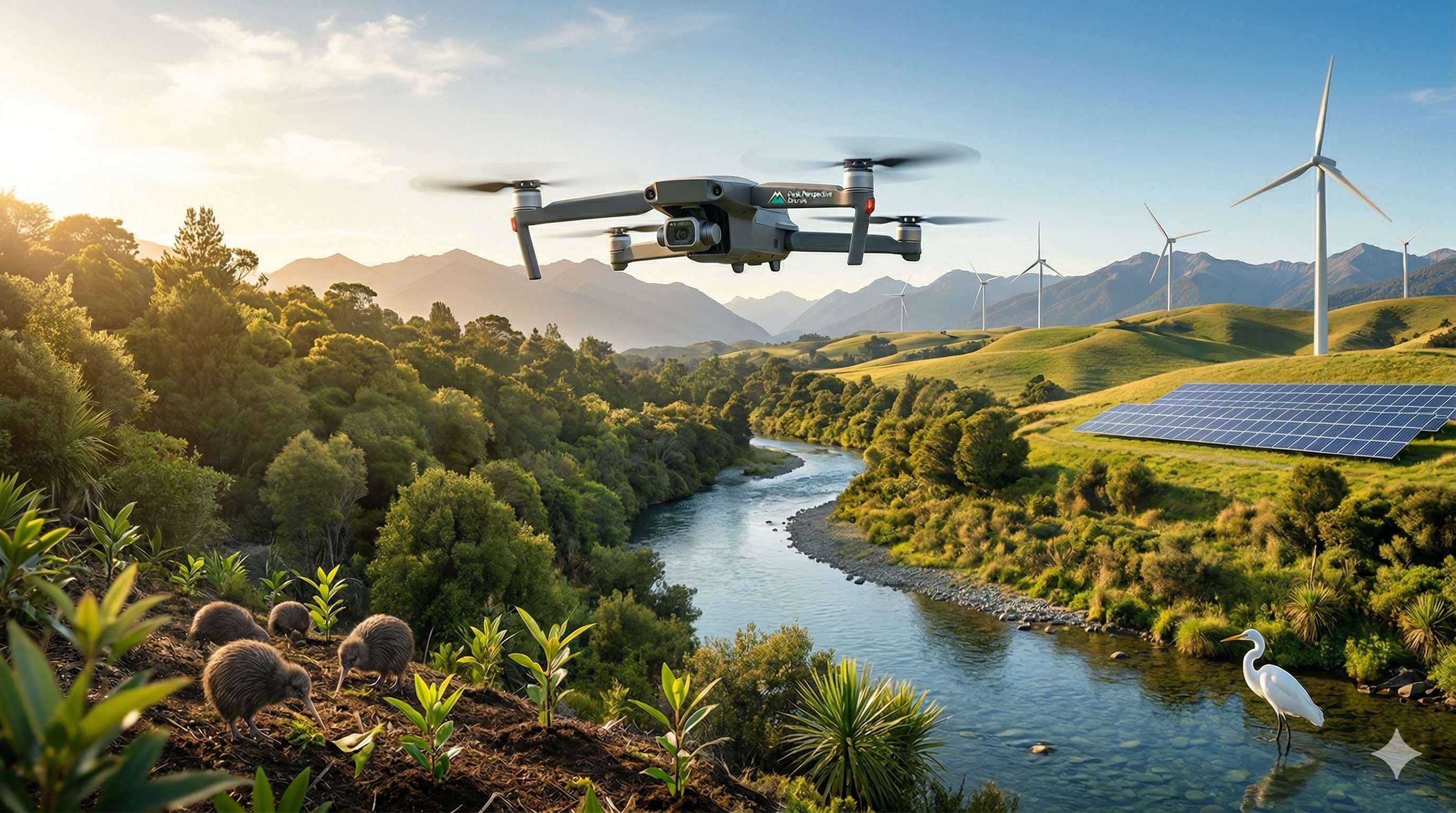
At Peak Perspective Drones, we love the view from the top, but we’re even more passionate about protecting what’s on the ground. Drone technology has evolved far beyond simple photography; it is now one of the most powerful tools in the global effort to build a sustainable future.
1. Slashing Carbon Footprints
Traditional site inspections often require heavy trucks, helicopters, or massive scaffolding crews. By replacing a fuel-guzzling 4WD with an electric drone, we drastically reduce the emissions associated with a single site visit.
2. Precision Agriculture: Less is More
Using multispectral sensors, we help farmers identify exactly which 2-meter patch of crops needs water or fertilizer. This "precision" approach prevents blanket-spraying, which keeps harmful chemicals out of our local waterways
3. Reforestation via Seed Dropping
Drones aren't just for cameras! Specialized drones can now fire "seed pods" into remote or fire-damaged areas that are too dangerous for humans to reach, helping to replant thousands of trees in a single day.
4. Detecting Methane and Gas Leaks
Equipped with "sniffing" sensors, drones can fly over pipelines and industrial plants to detect invisible gas leaks. Catching a methane leak early isn't just a safety win—it stops a potent greenhouse gas from entering the atmosphere.
5. Thermal Efficiency Audits
Is your warehouse "bleeding" heat? Our thermal drones can spot insulation gaps in roofs and windows that are invisible to the naked eye. By fixing these leaks, businesses can cut their energy consumption by up to 30%.
6. Wildlife Protection Without Disturbance
Counting endangered species or monitoring nests used to mean tramping through delicate habitats. Drones allow conservationists to monitor wildlife from a distance, gathering data without stressing the animals or trampling rare flora.
7. Ocean and Water Quality Monitoring
From tracking plastic pollution in our bays to monitoring algae blooms, drones provide a rapid-response way to check water health. We can even use specialized "water-sampling" attachments to test remote alpine lakes.
8. Digital Twins for Sustainable Urban Planning
By creating 3D "Digital Twins" of cities, urban planners can simulate sunlight and wind patterns. This helps design "passive" buildings that stay naturally cool in the summer and warm in the winter, reducing the need for AC.
9. Illegal Logging and Poaching Patrols
In vast forest reserves, drones act as a high-speed eye in the sky. They can cover miles of territory in minutes, spotting illegal clearing or unauthorized vehicles much faster than a ground-based ranger.
10. Solar Farm Health Checks
Solar panels only help the environment if they are working at 100%. A single "dead" cell can drag down the efficiency of an entire row. Thermal drones can scan thousands of panels in minutes to find the one faulty unit that needs replacing.